
[Intro] A strategist who reads the deficiencies of the times and writes the future of children
Today, the field of education in South Korea stands before a massive wave of 'speed' and 'efficiency.' To achieve a single point, children drift between printed words, and amidst a maze of correct answers, they are forgetting how to ask themselves who they truly are. In this era of chaos, there is a figure who travels back and forth between Busan and Seoul, calling for the 'restoration of the essence of education.'
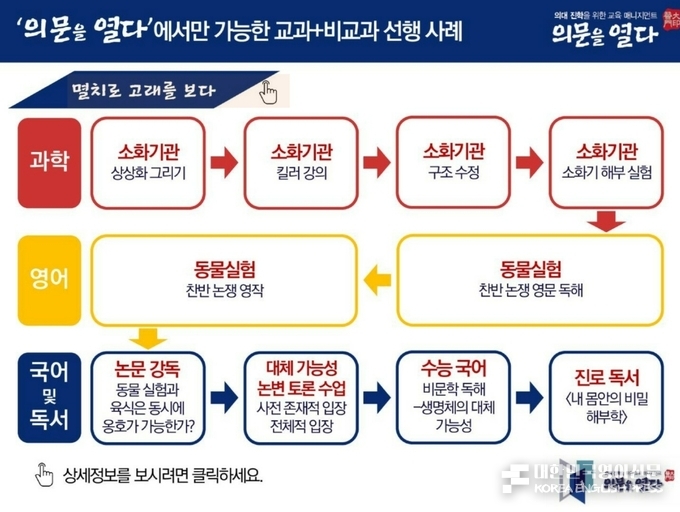
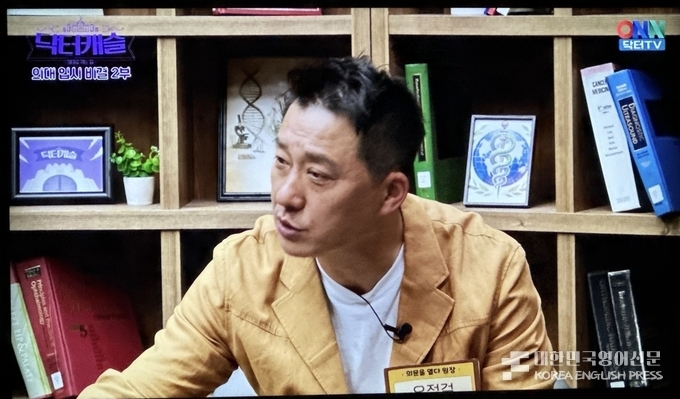
CEO Yoo Jeong- geol. He is a strategist who examines children's "thinking muscles" beyond cold entrance exam data, and an innovator who tears down the fortress of the admissions system through the fundamental power of literacy. The places he operates, "Opening Questions" and "Bichang Literacy," go beyond mere learning spaces; they are akin to a solemn question posed to an era where intellectual curiosity has been stifled.
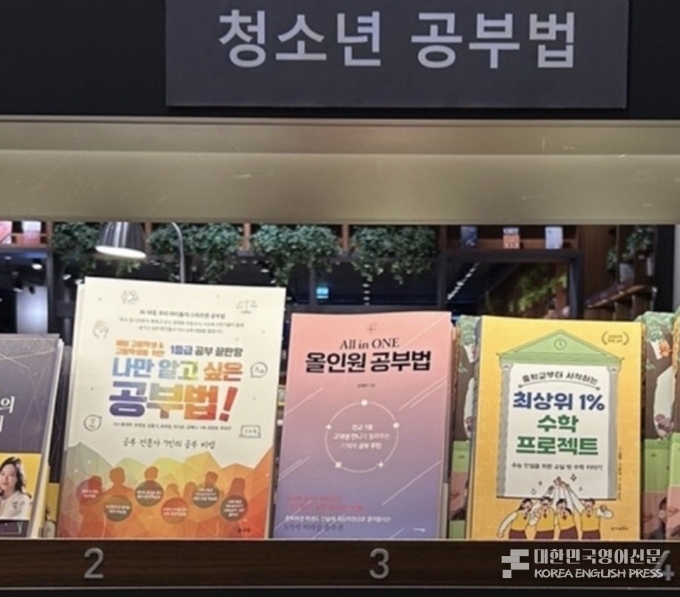
We met with the man who has spread the value of a "proactive life" to countless students through his book *Study Methods I Want to Keep to Myself* and who has presented sound arguments in the field of education through his incisive columns. We begin a deep and elegant dialogue about the essence of education and why "humans who read and think" still prevail in this era where artificial intelligence is replacing knowledge. [Editor's Note]
|
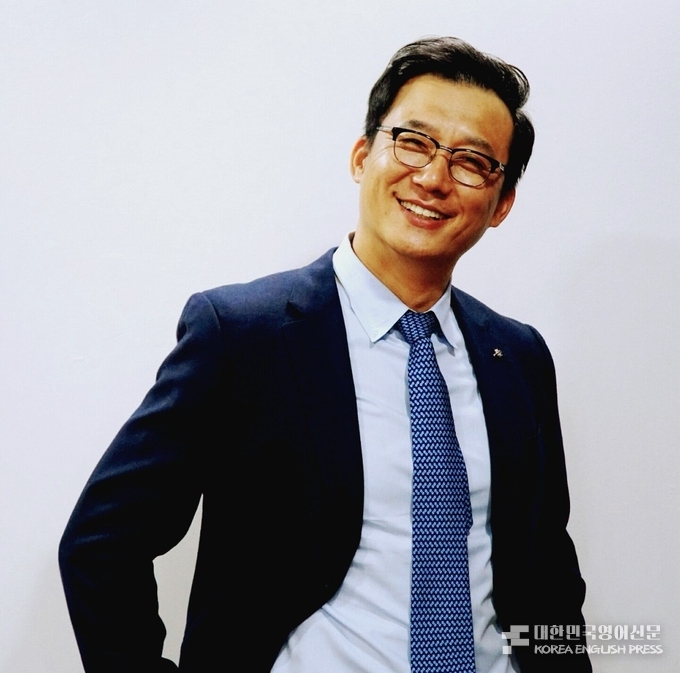
Representative Yoo Jeong-geol (Current Director of Opening Questions & Bichang Literacy Academy)
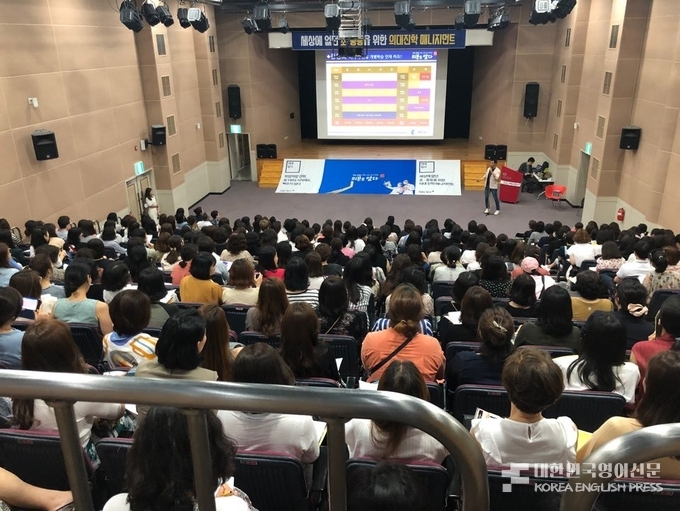
○ Major Institutions and Educational Experience • Current Head Director of Mun-eul-yeolda Academy (Specializing in medical school and top-tier admission strategies) • Current Head Director of Bichang Literacy Academy (Operates literacy and thinking skills enhancement programs for elementary and middle school students) • Current Columnist for the Education Union Newspaper (Specialized contributor on education policy and literacy education) • Conducted educational management and extracurricular strategy consulting for heads of major academies nationwide • Main speaker for entrance exam information sessions and education seminars in the Busan and metropolitan areas
○ Areas of Expertise and Core Competencies • Literacy Education Expert: Designing a Text Analysis-Based Self-Directed Learning Model • Extracurricular Education Planner: Establishing student record strategies for medical school and top-tier university admissions • Admissions Manager: Presents individualized roadmaps based on the changing admissions system • Education Content Director: Development of a question-centered thinking skills expansion program
○ Major Publications and External Activities • Major Work: *Study Methods I Want to Keep to Myself* (Student-led learning strategies and motivation) • Column Series: Contributed to numerous columns including 'Yoo Jung-geol's Educational Commentary' in the Education Union Newspaper • Lecture Activities: Nationwide lecture tours including 'Special Lectures on Literacy for Parents' and 'Seminar on Success Strategies for Medical School Admissions' • Networking: Exchange and joint project planning among a group of education experts connecting Seoul and Busan • Alias: 'Educator who opens the doors of intellect', 'Authority on literacy-based entrance exam strategies'

|
Section 1. The Essence of Education and the Power of 'Questioning'
Q1. You run an academy named 'Opening Questions.' What is the ultimate educational goal that this name aims for, and what are the philosophical implications contained within it?
CEO Yoo Jeong-geol: The etymology of "education" lies in "educe," meaning to draw out. However, our education system has long been mired in the indoctrination of "pushing things inward." The name "Opening Questions" embodies our earnest hope that students will become active seekers of knowledge, rather than passive recipients.
All great discoveries began not with answers, but with 'questions.' Our ultimate goal is to encourage children to ask "Why?" about phenomena they took for granted, and to broaden their horizons of thought through the process of resolving those questions. We are confident that this will become the fundamental power that enables a child to open the countless doors of life they will face throughout their lives, not just for entrance exams. This conviction makes possible the expansion of 'of.' It is a diffusion that can 'open' any noun placed before a genitive case particle. They will open the door of 'thought,' the door of 'mathematics,' the door of 'the future,' and the door of 'success.'

Q2. You reign as a powerhouse in medical school admissions in the Busan region. What is your unique and unrivaled 'strategic mechanism' that enables you to generate information capabilities and results comparable to those of the Seoul metropolitan area?
CEO Yoo Jeong-geol: Entrance exams are not a battle of the quantity of information, but of the quality of that information and the perspective from which it is interpreted. The secret to overcoming the regional limitations of Busan lay in data analysis that penetrated the 'essence of entrance exams.' The 'essence' of entrance exams is believing in a child's potential and supporting and assisting them so that that potential can become reality. This support and assistance is not about 'pretending to believe,' but about seeing the child through to the very end while 'acting as if believing.'
We are not merely technicians focused on meeting the cut-off scores. We contemplate how to integrate the "academic competence" and "suitability for the major" that universities seek through comprehensive student record screenings into a student's life. In particular, medical school admissions require proof of ethical reflection befitting a person who deals with life, alongside intellectual completeness. Our powerful differentiator lies in a "storytelling strategy" that constructs a narrative by drawing out depth from even the smallest of a student's activities. In that sense, I aspire to be a designer—a "designer" who plans "narratives."
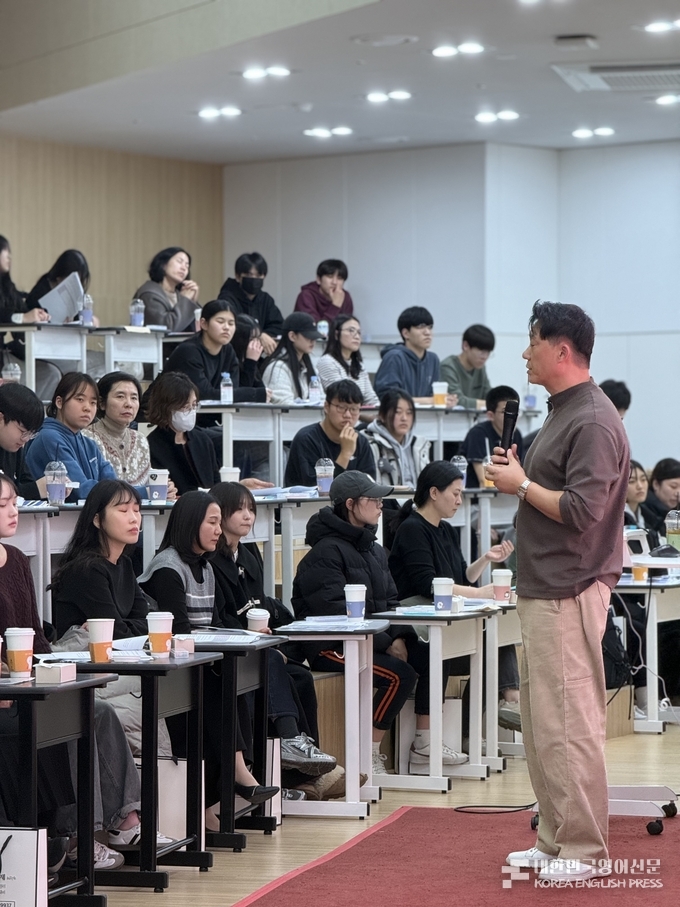
Q3. You are opening new horizons in literacy education through the brand 'Bichang Literacy.' I would like to hear the inevitable reason why a director specializing in entrance exams is so obsessed with 'reading education.'
CEO Yoo Jeong-geol: A shocking commonality I discovered while counseling countless top-tier students in the college entrance exam field was 'text phobia.' There are far too many children who can solve difficult math problems, yet lose the context and drift between the words when reading non-fiction Korean passages or interview prompts.
Literacy is like the 'blood vessels' of all learning. Just as even the best nutritional supplements (expensive private tutoring, excellent lectures) cannot be delivered throughout the body if the blood vessels are blocked, learning without literacy is merely a house built on sand. Killer questions and in-depth interviews, which are the final battlegrounds of entrance exams, are ultimately determined by the ability to uncover the 'hidden logic between sentences.' The reason I focus on literacy is that it is both the very bottom and the very pinnacle of the entrance exam process. Literacy is the act of understanding 'critically' and expressing 'creatively.' Unlike reading comprehension, literacy implies 'expression' that extends beyond 'understanding.' The tools of 'understanding' are not limited to 'text' but include 'pictures, photographs, charts, graphs, and videos,' and the tools of 'expression' are the same. Literacy is the balanced power of understanding and expression. While 'reading' is important, 'listening' is also important, and 'speaking and writing' are equally important. I want to help cultivate the power to think like a philosopher, write like a poet, and speak like an announcer, along with the 'problem-solving' ability to feel with the heart what is read with the head and put into action with the hands and feet.
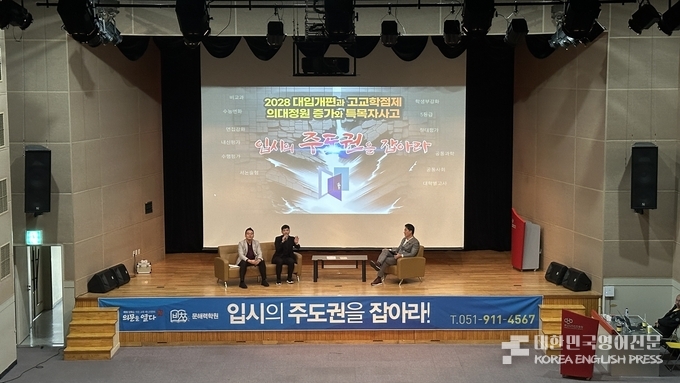
Q4. As an education administrator and planner, you have met tens of thousands of students and parents. What is the deepest sense of fulfillment you feel as an educator, and conversely, what is your greatest compassion for the reality of our education system?
CEO Yoo Jeong-geol: The greatest reward comes when a child breaks through their own limits. Rising grades are merely a secondary result; as an educator, I feel an indescribable thrill the moment a child's eyes light up and they declare they will design their own future.
On the other hand, I feel deep compassion when I see children consumed by speed. It is heartbreaking to see a reality where they are driven by the compulsion to finish calculus faster than the child next door, leaving them with no time to reflect on what they are suffering for. Although education should be about 'growth' rather than a 'race,' it breaks my heart the most to see the backs of children forced into the race while their growth has been stifled.
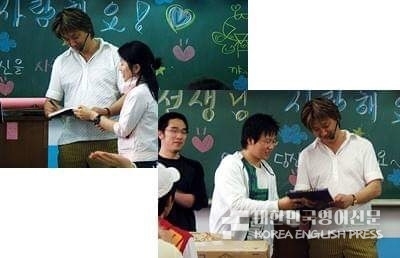
Having done this work for many years, I have met 'disciples who nurture' me, their teacher. There are students who teach me in their thoughts, hearts, and lives. As the tasks we once read and thought about together turn into master's and doctoral theses, and as they enter the path of teaching just like me, they open up the lecture notes from their days of studying with me as if they were their own personalities; at some point, they even find themselves becoming my own teachers.
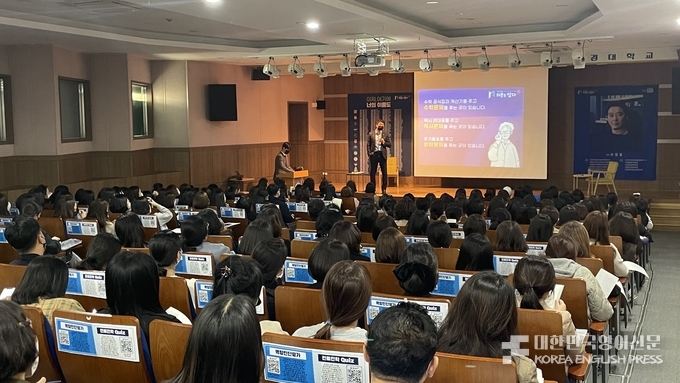
Section 2. Literacy, the Only Human Tool to Conquer the Age of AI
Q5. The decline in literacy among modern students is even being described as a "national disaster." What is the extent of the reality you observe in the field, and what do you analyze as the social background of this phenomenon?
CEO Yoo Jeong-geol: This is no exaggeration. Our children are currently exposed to 'digital dyslexia.' As they become accustomed to short videos and stimulating thumbnails, they find reading text that requires more than three minutes of concentration painful. This goes beyond a simple decline in learning ability and leads to a lack of 'social literacy,' which involves empathizing with the emotions of others and grasping social contexts.
Underlying this situation is the "paradox of convenience." An environment where information is obtained with a single touch has caused children's "thinking muscles" to atrophy. As they consume only excreted information without the process of digestion being skipped, a deformed structure is becoming entrenched where knowledge has become bloated but wisdom has become impoverished. However, what we must focus on here is who is responsible for this "systemic problem." I assert that all children's "faults" stem from adults, and thus, the issue of literacy also originates from adults. Adults who entrust the upbringing of three or four-year-old children to "smartphones" for their own convenience, adults who do not show themselves reading, adults who do not put into practice what they have learned and felt through reading, and adults who tell children to stop reading because studying is more important—these are the adults who are the root of the problem, yet it is regrettable that they are wielding the switch against the children who are the victims.
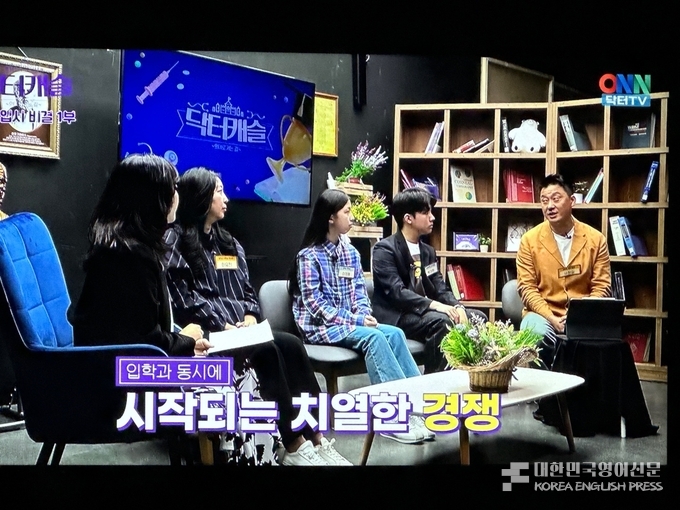
Q6. Can a student with poor literacy skills overcome the high hurdle of top-tier admissions, particularly medical school admissions, as long as they are diligent? I would appreciate some realistic advice.
CEO Yoo Jeong-geol: To be frank, 'diligence' alone is absolutely insufficient. Effort is merely the default; the differentiation among the top tier comes from 'reasoning ability.' MMI interviews for medical school admissions and high-difficulty passages in the CSAT Korean language section do not require reading the text literally, but rather the ability to grasp the logical structure hidden beneath the surface and critically verify it.
Students lacking literacy may be able to reach a certain score range, but they will be held back at the critical moment. Entrance exams are ultimately a battle of whether one can answer the one question that others cannot, and the key to solving that one question lies not in knowledge, but in the literacy to master the passage. As mentioned earlier, literacy is also "problem-solving" ability. If the pinnacle of "literacy" as generally defined by our society lies in "reasoning ability," the "problem-solving" ability I am referring to requires a form of literacy—the power for students dreaming of medical school to examine "their own problems" themselves. If one recognizes their own problems, reasons through the process of solving them, and applies it to daily life, even a "bottom-tier student" can enter medical school. I have actually witnessed a student who was at the bottom of their class in middle school gain admission to medical school. Of course, it required a lot more time and effort, but if you combine literacy—the power of understanding and expression—with the ability to solve one's own problems, there are sometimes instances where a dullard outperforms a gifted person.
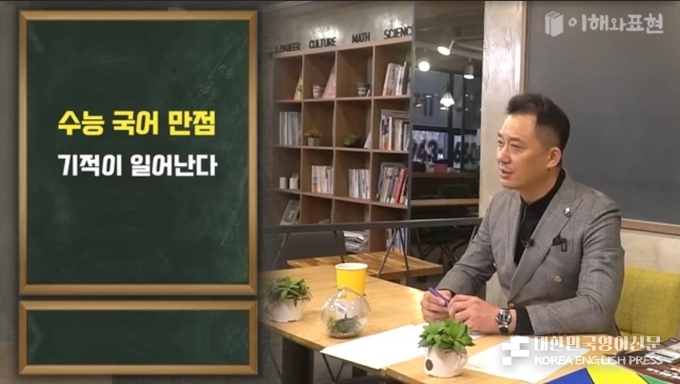
Q7. For parents concerned about their children's literacy, could you suggest a 'Yu Jeong-geol style literacy enhancement prescription' that can be immediately put into practice in daily life?
CEO Yoo Jeong-geol: First and foremost, I recommend 'Havruta at the dining table.' Rather than forcing a book to be read, it is important to have the experience of parents and children discussing a short article or column seen today from different perspectives. The question, "What do you think?" awakens the child's brain.
I also recommend "summarizing" training. Summarizing what you have read in your own voice is the best literacy training that involves the process of restructuring information. Parents must be patient, even if their child's answers are clumsy. Literacy is cultivated not by the speed of getting the right answer, but through the patient time spent correcting mistakes. Furthermore, you must explain that meaning is not "isolated" in writing. The meaning of any text is generated within the structure of its context. The word "to ride" (tada) acquires meaning when it is combined with words such as "neck" (moki), "car" (chae), "face" (eolgi), or "meogiga" (gogi)—that is, when it is not isolated. The "meaning" formed in this way appears in various forms within the text. Writing is essentially a dense concentration of "identical meanings" expressed in "heterogeneous expressions." In essence, it means repeating the same meaning with different sounds. This is precisely the point one realizes after finishing so-called "brick books."

Q8. We are living in an era where generative AI, such as ChatGPT, is replacing human intellectual labor. On what logic does the paradox arise that human literacy actually becomes an even more powerful weapon in such an era?
CEO Yoo Jeong-geol: AI provides answers, but humans ask the questions. To ask good questions, literacy that penetrates the essence of a problem is essential. Furthermore, 'critical literacy,' which involves judging which information is true and which is valuable amidst a flood of information generated by AI, is a uniquely human domain that machines cannot imitate.
Ultimately, competitiveness in the AI era depends not on "who possesses more information," but on "who can weave information together and make judgments more deeply." Literacy goes beyond mere reading ability and will become a class-based criterion determining whether one will utilize AI as a tool or become its slave. In other words, it is about whether one can converse with generative AI. We must not stop at simply watching AI produce "high-level outputs" even in response to "low-level prompts." To use AI efficiently, we must engage in repeated "give-and-take," and this exchange is only possible if we possess the ability to verify the "authenticity," "value judgments," and "verification" of the information received. The power of this "give-and-take" is precisely what constitutes literacy in the AI era.
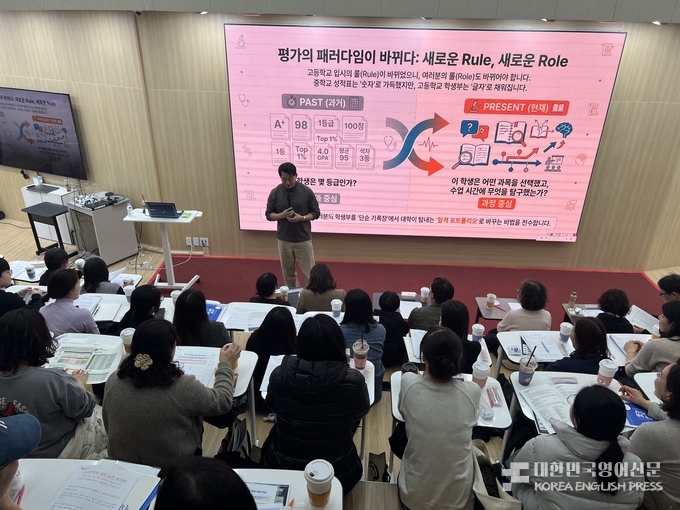
Section 3. Social Calling Through Writing and Media
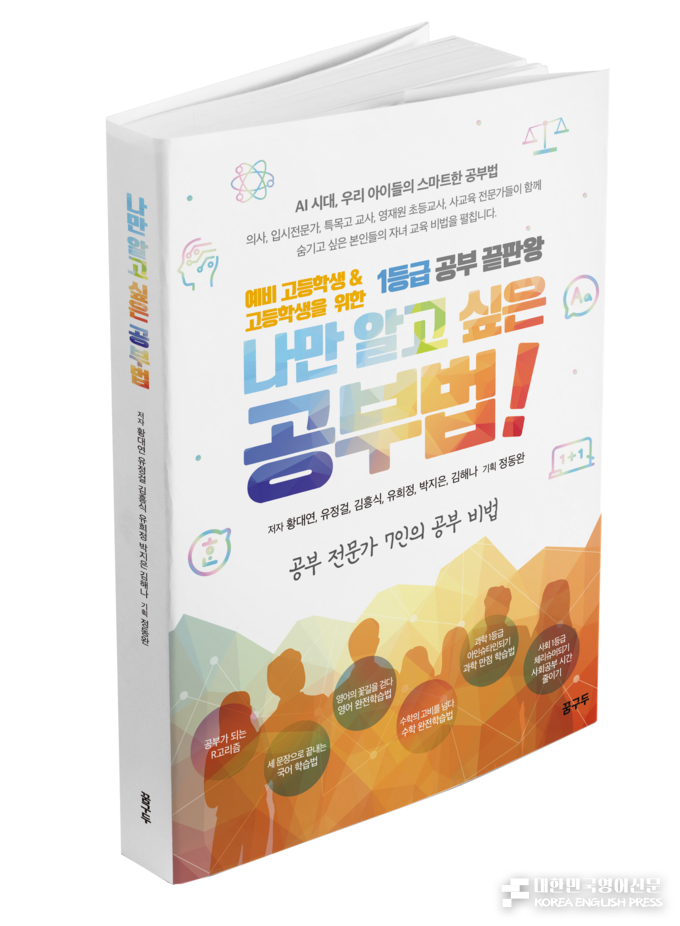
Q9. Many students preparing for exams find your book, *Study Methods I Want to Keep to Myself*, to be of great help. What was the most pressing topic you wanted to convey to the world through this book?
CEO Yoo Jeong-geol: I wanted to return the sovereignty of studying to the students. Countless children are being dragged around by cram school schedules, doing 'someone else's studying.' Through this book, I emphasized 'agency' in studying.
True learning involves facing your weaknesses, formulating your own strategies, and fully experiencing both failure and success in the process. I wanted to convey that studying is not merely a means to an end—getting into a good university—but a process of breaking through one's limits and realizing oneself. I wanted to prove that the message, "Believe in yourself and start your own way of studying," is a more powerful force than any college entrance exam strategy.
And above all, I wanted to convey that the method of independently selecting the 'answer' to a 'question' from the 'next text,' grasping the 'topic'—which is both the purpose of reading and the tool for interpretation—is fundamental to learning the Korean language, and that when all texts in this world acquire meaning within a context, 'identical meanings' become densely concentrated as 'heterogeneous expressions.'
Q10. Where do you consider the most urgent area in the current South Korean education system to need 'operation'?
Representative Yoo Jeong-geol: We must operate on the disease known as 'uniformity' in education. The method of applying the same standards to all children and lining them up runs directly at odds with the ideal talent of the 21st century. In particular, the dichotomous evaluation system of school grades and the College Scholastic Ability Test (CSAT) is paralyzing children's creative thinking.
Innovation in assessment methods is urgently needed. We must move beyond simply testing correct multiple-choice answers to expand essay- and descriptive assessments, and multifaceted evaluation models that reflect the unique characteristics of individual students must be deeply integrated into the public education system. Education must declare the "end of averages" and undergo a radical transformation in a direction that respects the "value of the individual."
Otherwise, we cannot break this bad cycle that turns the 'gifted and talented' into the 'average and dull.'
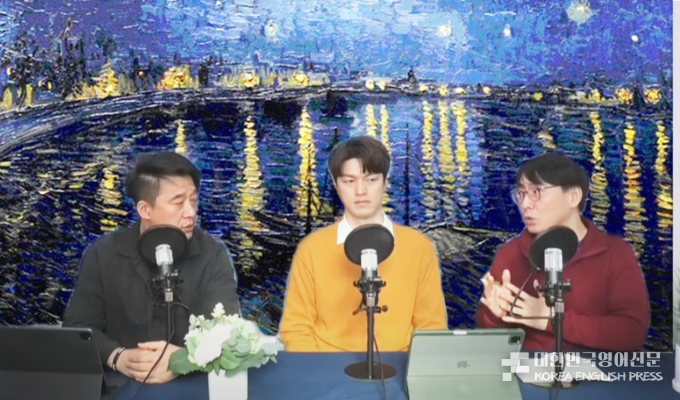
Q11. When writing columns, do you have a personal philosophy or principle for balancing quality and popularity?
CEO Yoo Jeong-geol: I aim for 'philosophical reflections written in the language of the field.' Overly academic terminology alienates the public, while language that is too light causes the message to lose its power.
My principle is to "capture the stories of the lowest places with the highest dignity." While basing my writing on vivid examples gained from interacting with children in the field, I strive to unravel the essential principles that underpin these phenomena using elegant and logical prose. I select every single word with the hope that readers will gain not only knowledge but also comfort and reflection simultaneously. I hope that the "pattern of my writing" thus woven will reach the reader's "mind," be conveyed to their "heart," and inspire them to take action with their "hands and feet."
Q12. If you are currently planning your next book, I would like to know what kind of positive influence you hope it will have on our society.
CEO Yoo Jeong-geol: I am preparing a guide for parents getting ready for the 'era where literacy is capital.' I am writing this based on specific examples and scientific evidence to explain how parents' language habits and family reading culture determine a child's intellectual assets.
I hope this book is not merely a technical guide to help students excel in their studies, but rather an opportunity for parents and children to communicate more deeply and grow together through the medium of text. I believe that when the home becomes the cradle of literacy education, the intellectual foundation of our society will become even richer.
Section 4. Solidarity and the Future: A New Hope for Korean Education
Q13. Your extensive scope of activity spanning Busan and Seoul appears to be a move that goes beyond simple business expansion. What is the true nature of the 'nationwide education platform' that CEO Yoo Jeong-geol envisions?
CEO Yoo Jeong-geol: My dream is the "equal upward standardization of education." My goal is to establish an integrated online-offline system that can deliver the essence of high-quality entrance exam information and literacy education, currently concentrated in the capital area, to underprivileged children in the provinces. I hope that being born and raised in the provinces does not become the starting point of inequality, and that being born and raised in the capital area does not become a situation where one flounders in a swamp of studying.
I want to put an end to the tragedy where physical distance leads to disparities in the quality of education. By uniting with competent educators in every region to create an 'educational ecosystem' where the best curriculum can be experienced anywhere—this is the reason I tirelessly travel back and forth between Seoul and Busan, and it is my mission.
Q14. CEO Yoo Jeong-geol, you are walking the path of a 'strategist' in the field of education, as well as a 'mentor' who cares for the souls of children. What does the 'completion of education' you dream of look like, and what kind of teacher do you want to be remembered as by your children in the future?
CEO Yoo Jeong-geol: I believe the culmination of education is not simply sending a child to a prestigious university. It is about enabling a child to affirm their own life and to cultivate a "solid inner self" capable of finding a way forward through the weapon of "thinking" even in the face of any adversity. Knowledge has an expiration date, but wisdom lasts a lifetime. Cultivating the power to read the world through literacy and change it through questioning—that is the ultimate destination of the education I pursue.
It would be the greatest honor if, in the future, my students remember me as "someone who believed in my potential more than I did myself" and "a teacher who awakened the joy of asking questions rather than simply giving the answers." To remain as someone who kindled a small spark in the hearts of children—that is the sole reason I walk the path of education, traveling back and forth between Busan and Seoul every morning without getting weary.
Q15. Finally, what is a 'sincere' message you would like to convey to all the students, parents, and fellow educators of this era who are climbing the rugged mountain of education?
CEO Yoo Jeong-geol: Education is an 'art of waiting' where results do not appear in a short time. Even if your child's grades are stagnant right now or there seems to be a long way to go, never distrust their potential.
Children bloom like flowers in their own seasons. Our task is not to hastily pull at the petals, but to build a solid 'root of literacy' and shine the 'sunlight of questioning' upon them so that they can bloom on their own. I, too, will walk alongside you on this path, serving as an unwavering signpost. Sincerity always prevails, and education filled with sincerity never fails.
[Conclusion] Education that begins with new questions, not a period
The conversation with CEO Yoo Jeong-geol went beyond the mere sharing of entrance exam strategies; it was a journey of intense contemplation seeking the 'North Star' that education in our time has lost. Even as he spoke of cold data and exam techniques, he never lost sight of the children's souls, and his gaze, as he preached the necessity of literacy, was always directed toward the fundamental landscape of a 'humane life.'
The faint smile he left as the interview concluded held both conviction and compassion. It was a conviction that education is not a process of standardizing children by injecting correct answers, but rather the "art of waiting"—silently standing by their side to awaken the giant sleeping within. It was also a deep compassion as a teacher for children who are losing their own light, pushed aside by the speed of the world.
The 'question' he posed has now become a task for all of us. Are we currently building walls that force only correct answers upon our children, or are we placing the key of intellect in them so that they can read the world and open doors for themselves? [Editor's Note]
[Video Link]
[Korea English Press]


